
Stuck in the vicious cycle of binging, purging and restricting?
Food Freedom Coach can help!
⭐ With online coaching sessions, phone support and in-between session support, you can start your journey towards food freedom today
⭐ We equip you with tools and strategies to break free from binge eating, purging and restricting
Supports offered:
💛 Education on bulimia, binge eating and emotional eating
💛 Skills to stop the vicious cycle of disordered eating
💛 Learn how to eat intuitively again and trust your body to make decisions around food
💛 Sharing our lived experience to empower, motivate and encourage you along your journey
💛 Understanding how the eating disordered developed
💛 Unpacking beliefs that underpin the eating disorder
💛 Education on anxiety
💛 Tools to help manage anxiety
💛 Learn how to accept your body
💛 Learn how to enjoy exercise again, rather than use it as punishment
💛 One-on-one or group coaching session
💛 Personal in-between session support
💛 Goal setting and problem solving
💛 Accountability
💛 Graded exposure to fear foods
💛 Meal support
💛 Discover your true values
💛 How to live a life according to your values
💛 Discover your true identity, seperate from the eating disorder
💛 Encouragement and motivation
💛 A safe place to talk about your struggles
💛 Information and support for people supporting someone with an eating disorder
What you will learn
Seven Key Principles
In general, we have found food freedom typically fall within these seven principles. We will provide education, skills, insight and in-between session support to help you achieve each of these key food freedom objectives.
-
Learn to eat intuitively again and trust your innate ability to make decisions around food
-
Develop more balance and flexibility with your relationship with food
-
To eat all foods without guilt
-
Develop coping skills to deal with anxiety and stress
-
Discover your true values and live a life that is rich and meaningful
-
Discover your true identity, seperate from the eating disorder
-
To have a better relationship with your body and accept your body


Food Freedom Group:
Binge Eating and Emotional Eating Recovery Group
This 8-week Recovery Group has been designed based on the CBT model, which is the gold-standard treatment for binge eating and bulimia. Through evidence-based strategies, participants will:
💛 Develop a deeper understanding of their eating patterns
💛 Understand what maintains the cycle of binge eating and emotional eating
💛 Identify triggers and increase awareness
💛 Learn strategies to break the cycle
💛 Learn how to cope with urges
💛 Build self-awareness and develop healthier coping strategies
💛 Learn how to deal with relapses
By joining a group, participants connect with peers experiencing similar challenges, fostering a sense of safety and mutual support. Facilitated by Coaches with lived experience, the 8-week Group provides an unique opportunity to gain insight and wisdom from those who have successfully navigated their own recovery journeys. Emphasis is placed on creating a safe space, fostering self-compassion and empowering participants to make sustainable changes, with a focus on connection, reflection and personal growth.
Sleep is one of the most overlooked but critical factors in both mental health and eating behaviours.
In New Zealand, insomnia is common. Research suggests that around 30–35% of adults experience insomnia symptoms, with a smaller percentage experiencing chronic insomnia that significantly impacts daily functioning. Insomnia is more than just “not sleeping well.” It often involves:
Difficulty falling asleep
Waking during the night
Waking too early and not being able to get back to sleep
Feeling unrefreshed despite spending enough time in bed
Over time, insomnia becomes a cycle. The more you struggle with sleep, the more your mind and body begin to associate the bed with wakefulness, frustration, or anxiety. This is why it can persist even when you’re exhausted and despite your best efforts to get a good' night’s sleep the following evening. When sleep is disrupted, everything feels harder, and maladaptive patterns around food can quickly become more intense and more difficult to manage.
Many people don’t realise that their struggles with food are being amplified by chronic exhaustion and disrupted sleep. I saw time and time again, how poor sleep was interfering with eating disorder therapy. You can read more about how sleep impacts your relationship with food here.
At Food Freedom Coach, we take an integrated approach, where our work together can start with CBT-i to treat insomnia. Following sleep stabilisation, we then leverage that increased capacity to support your relationship with food.
Cognitive Behavioural Therapy for Insomnia (CBT-i)
-
CBT-i (Cognitive Behavioural Therapy for Insomnia) is the gold standard, evidence-based treatment for insomnia. It is structured, practical, and highly effective'; often more effective than medication in the long term (when applied consistently and correctly). Rather than just focusing on sleep hygiene, CBT-i addresses the underlying factors that maintain insomnia, including:
Unhelpful sleep habits
Anxiety about sleep
Conditioned wakefulness (your brain associating bed with being awake)
Irregular sleep patterns
-
CBT-i typically includes the following key components:
Sleep Scheduling
You’ll establish a consistent sleep-wake pattern that strengthens your body’s internal clock. This helps regulate when you feel sleepy and when you feel alert.
Sleep Restriction Therapy
This evidence-based strategy reduces time spent in bed to match actual sleep time, which increases sleep pressure and improves sleep quality. While it can feel counterintuitive at first, it is one of the most effective components of CBT-i.
Bed Equals Sleep Therapy
Retraining your brain to associate bed with sleep.
Cognitive Strategies
You’ll learn how to work with racing thoughts, worry, and unhelpful beliefs about sleep (e.g. “I won’t cope tomorrow if I don’t sleep”). These thoughts often increase anxiety and keep the nervous system activated.
Relaxation Therapy
Relaxation and wind-down strategies help shift your body out of a heightened state of alertness, making sleep more accessible. These strategies are also effective for awakenings through the night.
Healthy Sleep Practices
Education on ways to reduce risk factors to prevent future vulnerability (similar to Sleep Hygiene).
While some of the strategies can feel counterintuitive at first, they are highly effective when applied in a structured and supported way. CBT-i helps you to become your own sleep expert, leaving you with practical and sustainable tools that you can keep using after therapy, and when you are at risk of a relapse.
-
Cognitive Behavioural Therapy for Insomnia (CBT-i) is widely recognised as a highly effective treatment for chronic insomnia. It is recommended as the first-line intervention, meaning it is the preferred treatment before medication.
Research, including large systematic reviews and meta-analyses, shows that CBT-i leads to:
Moderate to large improvements in time taken to fall asleep
Moderate to large reductions in night-time waking (and improved ability to return to sleep)
Moderate to large improvements in overall sleep quality
Small to moderate increases in total sleep time
In addition to improving sleep, CBT-i has been shown to:
Improve daytime functioning
Reduce fatigue
Support symptoms of co-occurring mental health conditions
Enhance overall quality of life
-
Treatment is usually 5-6 sessions, spread over 8 weeks. Although it may be longer for more complex presentations or if there are other physical and mental health conditions that need to be addressed. Similarly, treatment may be completed in 6 weeks if the problem is relatively straight forward. The great thing about CBT-i is that it leaves you with the tools and skills to deal with relapses in sleep.
-
Yes - CBT-i can be delivered effectively via online video sessions (telehealth).
Research shows that online CBT-i is as effective as in-person treatment, and in some cases may even lead to slightly better outcomes.
Online sessions offer flexibility and convenience, making it easier to access support:
No travel time, traffic, or parking
Sessions can fit around work schedules
Ideal for parents or those needing to stay at home
Accessible from anywhere in New Zealand
In practice, online CBT-i follows the same structured, evidence-based approach as face-to-face therapy, with the added benefit of being easier to integrate into daily life.


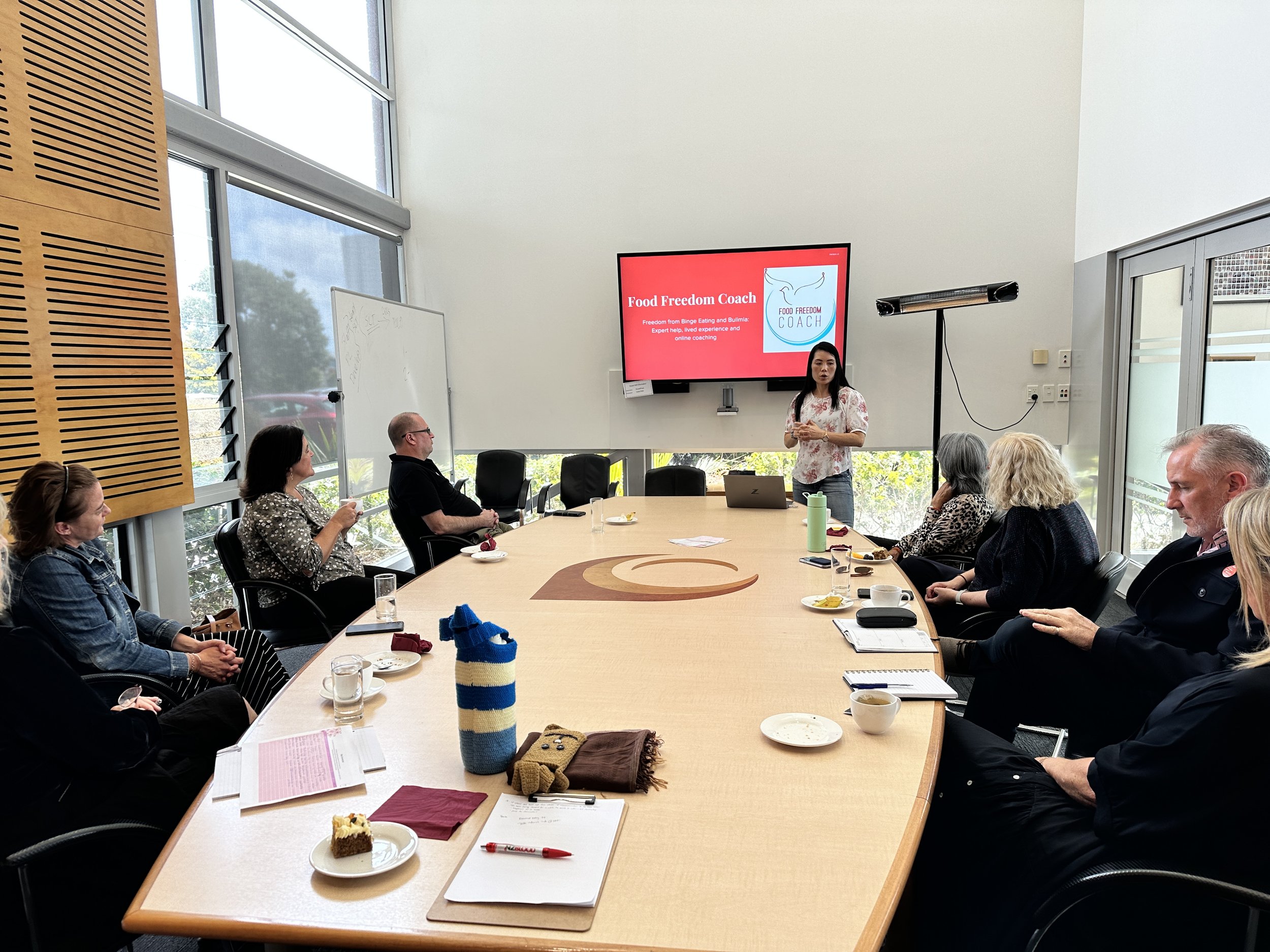
Presentations
Our group presentations are designed to equip attendees with the knowledge, tools, and empathy needed to better understand, identify, and support individuals struggling with eating disorders.
With a focus on evidence-based approaches and real-world application, these sessions are tailored for professionals in healthcare, schools, sports, or community organisations, as well as anyone seeking to make a difference in the lives of those affected.
Topics we cover include:
💛 Diagnostic criteria for eating disorders
💛 Risk factors
💛 Quick screening tools
💛 Warning signs to look out for
💛 How to approach someone you are concerned about
💛 Brief interventions for health professionals
💛 Where to get help
💛 Key components of CBT-i (gold-standard treatment for Insomnia)
"We are a group of Health Improvement Practitioners and health coaches offering brief interventions to patients within primary care. We were extremely grateful to Midi who presented at our Regional Symposium, providing us with valuable insights into difficulties that are increasing, challenging and under resourced in our population. Midi offered helpful and practical tools to identify, screen and treat disordered eating and many of us have gone on to refer patients to her for individualised coaching. I highly recommend this service if your team is wanting to upskill or gain confidence in working with eating disorders.”
— Karen
“The presentation was very clear and well presented by Midi. The content was extremely relevant, I thought, and put weight-loss in the broader context of healthy living and enjoying life. It also homed in on the mental side – building the case for mindfulness and conscious living/eating.”
What to Expect
1
Once contact has been made, we will call you for a FREE 20 minute consultation over the phone to discuss your needs and recovery goals to see if Food Freedom Coach is right for you
2
A time will be made for your initial assessment, where we will get to know each other and discuss your recovery goals. Your Coach will then come up with a personalised recovery plan tailored to your needs
3
We will then arrange follow up appointments based on the Package best suited for your needs, to start working in partnership towards a life free from binge eating